
15 Min Read

Vlad Zghurskyi
Content Creator
Key opinion leader marketing in Web3 is insanely powerful. Seriously, with 0 exaggerations, we can assure you that it is possible to build hype, drive adoption, and even bend markets.
15 Min Read
Vlad Zghurskyi
Content Creator
Key opinion leader marketing in Web3 is insanely powerful. Seriously, with 0 exaggerations, we can assure you that it is possible to build hype, drive adoption, and even bend markets.
Yet somehow, missed opportunities happen one on top of the other way more often than success stories. Is it the influencer’s fault? Hardly. Bad KOL strategies? Nuh.
Most problems come from mistakes brands make when working with KOLs.
Some mistakes are painfully obvious, while others are tricky to spot. If you don’t want your campaign hype to die faster than a meme from last year, there’s a way to avoid every single slip-up. How? Read on!

So what are these common pitfalls that brands step into every time they look for KOLs? Let's find out. Spoiler: they’re more avoidable than you think.
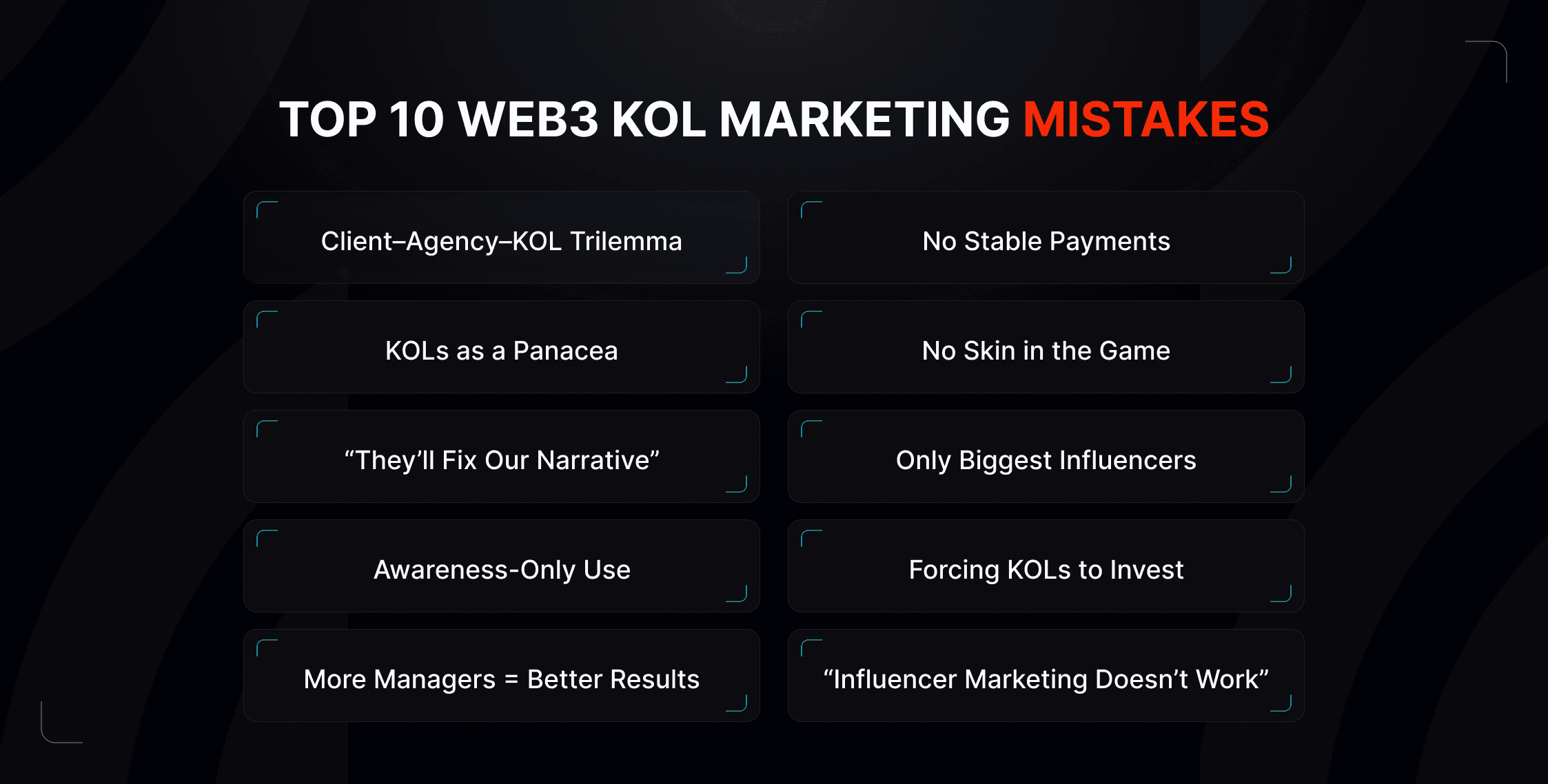
The classic triangle: client wants “those specific KOLs,” agency nods, KOLs post anyway. Sounds harmless, but audiences notice when content feels off.
To give you a bit more context: a client often insists on getting a particular influencer. But often these “favorite” influencers don’t match the brand’s niche, target audience, or values. That means their content ends up feeling irrelevant or forced.
An X follower might scroll by or, worse, comment: “Why are you advertising something we don’t need?” Misaligned influencer content can erode trust and kill engagement.
Brands need clearly defined objectives and audience demographics alignment, and definitely not a wishlist of famous names. In the end, it works badly for KOL's target audience and the project itself.
There is a deeper take on this point from our CMO and partner Ruslana Safina based on her 5-year experience in the industry. Check it out.
Some brands act as if influencer marketing alone will save the day. “We just need KOLs; everything else will magically work.” Not quite. KOLs amplify what’s already there. If your product or brand experience is weak, the audience will spot it. Think of KOLs like a spotlight: they reveal the good, but also the bad.
That’s why before launching any KOL campaign, you need a solid foundation: clear messaging, a working funnel, and a well-defined GTM plan. Only then will KOLs actually multiply results instead of exposing gaps.
If you don’t have that groundwork yet, we can help you refine your GTM and strengthen the fundamentals.That dramatically increases the effectiveness of any KOL campaign you run. So, drop us a message!
A common mistake is believing a KOL will magically polish the narrative. Yes, influencers can highlight your strengths, but on a large scale, any shortcomings get amplified too.
Launching campaigns with big influencers on projects that aren’t fully baked can backfire, damaging brand loyalty and ROI.
Even if you give your content creator creative freedom (and you should anyway) if you your brand is not in the right place, don't expect cool branded content that fix your problems.
One of the most common things you can hear is: “We just want KOLs for awareness.” Well, yes, influencers can create visibility, but awareness without conversion is a wasted opportunity.
KOL campaigns should be part of a funnel, from initial touchpoints to purchase decisions.
Many brands underestimate how influencer content can drive measurable ROI and leave a real impact IF... you structure it strategically.
If you’re not sure how to move beyond “just awareness,” tell us what business goals you actually want to achieve. And then, we’ll show you how KOLs can genuinely get you there.
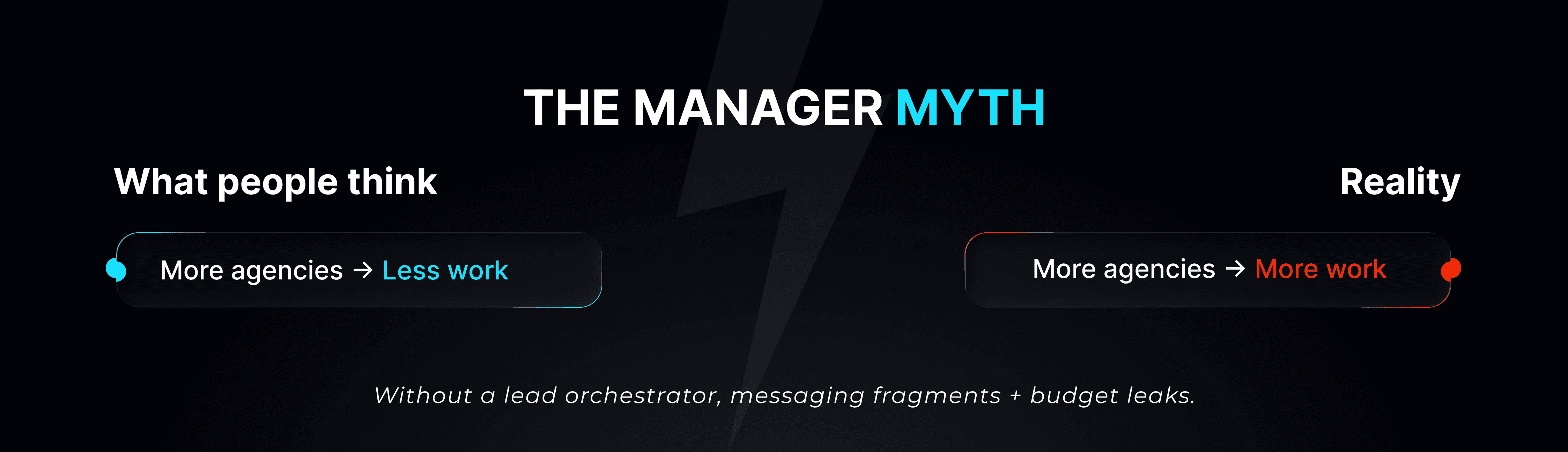
Some brands think that adding multiple agencies or managers will automatically scale campaigns. But here’s the simple math:
What people think:
More agencies → less work
The reality:
More agencies → more work
Without a lead agency or internal orchestrator, campaigns become fragmented. Managing multiple agencies is necessary for consistent messaging and avoiding wasted budgets.
"We don't pay stables to KOLs."
"Wait wait wait… you consider your tokens less valuable than stables????"
Look, every single employee in your company is getting paid. Maybe key-performance indicators affect the %, but.... you get it. So, why should KOLs be different?
Crypto-savvy marketers know that stables can be a KOL marketing without stables is not possible. Yet, many brands still hesitate to compensate KOLs properly.
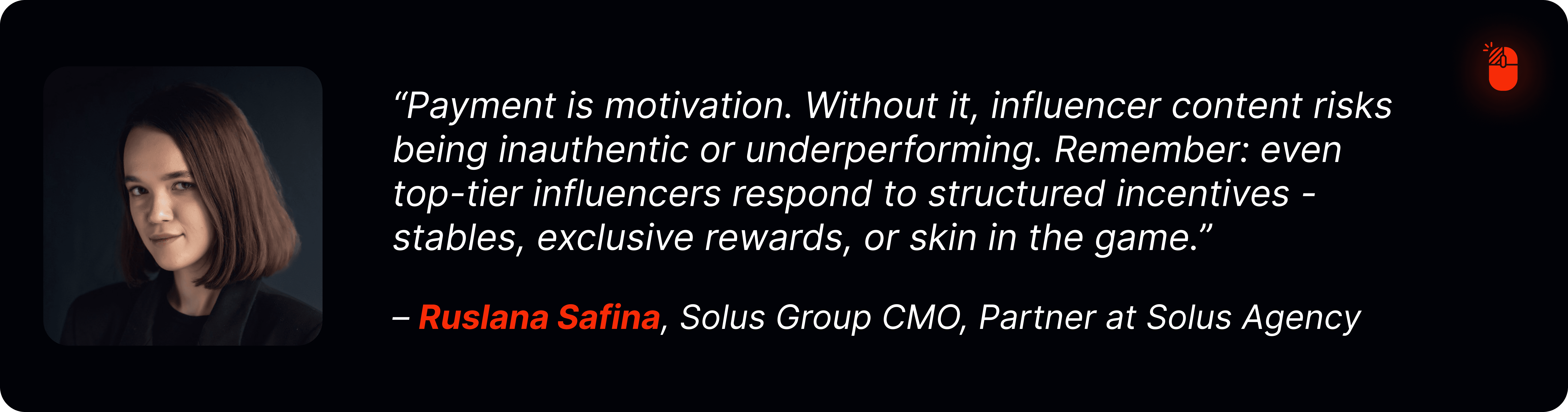
So, talking about that skin in the game thing.
Paying KOLs is, as they say, only half the equation. But still, paying is important. That's what will give you 100% commitment.
But… if you want 120% or even more, give them a stake in your project. Exclusive codes, community privileges, or access to early product releases create a sense of ownership.
When influencers feel invested, you've got a partnership.
And that leads to better results: their promotion resonates, driving a higher engagement rate and conversion. And obviously, the transactional approach rarely builds authentic connections.
“1 million followers or nothing.” We can say politely that this thinking is a c... trap:)
Here's a simple thing: follower count doesn’t mean influence. At least it does not equal. Micro-KOLs and mid-tier influencers often generate higher engagement, better ROI, and more authentic audience interaction.
The secret - which is not really a secret but rather a rational approach - is leveraging a mix of influencer tiers. Have micro-influencers for niche engagement, larger KOLs for broad reach in the current marketing landscape.
Create a cohesive influencer campaign structure, and key performance indicators will go up. Btw, you can make a deeper plunge into how to analyze KOLs here.
Some brands expect KOLs to buy in, stake tokens, or heavily invest in the project. Okay, we 100% agree: alignment is useful.
But forcing investment can backfire, creating misaligned incentives. Smart campaigns let KOLs naturally see value.
Moreover, they can participate selectively and amplify your brand without coercion. Otherwise, don't expect your campaigns to remain data-driven and highly effective.
Finally, brands often skip influencer marketing entirely because they have heard it’s inefficient. The truth is, however, refreshing.
Influencer marketing is as effective as your strategy. Campaigns fail not because of the influencer but because of misaligned goals, poor activation, or avoidable mistakes in planning.
If you do everything right, influencers drive brand growth, engagement, and even e-commerce sales.
Ok, we know every single problem that can break your KOL campaign. Why? Because we've been working with influencers and running successful campaigns since 2017. In other words, we've seen it all.
Audit your campaign

Mistake | How to avoid it |
Treating KOLs as products in supermarket | Align KOL selection with audience fit and campaign objectives |
Thinking KOLs are a panacea | Make sure the project & marketing foundation is solid |
Assuming KOLs only show best side | Audit brand readiness before launch |
Using KOLs only for awareness | Integrate into the conversion funnel |
Believing more managers = better results | Centralize coordination |
Refusing to pay KOLs stables | Offer structured incentives |
Ignoring skin in the game | Give KOLs stake or exclusive access |
Chasing only the biggest influencers | Mix micro-, mid-, and macro-KOLs |
Avoiding these financial pitfalls is easier when you have a pre-defined framework for interaction. Discover our full Web3 KOL strategy guide to build a solid foundation for your next campaign.
Only work with KOLs whose audience and content truly match your campaign goals, not just client requests.
KOLs amplify what exists; they won’t fix weak products or marketing.
Launching with unprepared projects exposes flaws at scale, not just strengths.
Integrate KOLs into a funnel that converts.
Without a lead orchestrator, adding more managers only fragments campaigns.
Proper compensation motivates quality content and avoids underperformance.
Give KOLs stakes or exclusive access to make them genuinely invested in your success.
Micro- and mid-tier KOLs often outperform big names in engagement and ROI.
Alignment works best when KOLs participate voluntarily, not under pressure.
Schedule a call
Look at whether the KOL naturally speaks to the same segment you’re targeting: traders, builders, NFT collectors, gamers, or retail newcomers. Check their past campaigns and see what type of projects actually performed well with their audience. Review engagement quality, but focus on who engages, not how many: real users, not bots or engagement pods. Finally, make sure the KOL has credibility in your specific niche.
Follower count is the least predictive metric in Web3 PR — it inflates easily and converts poorly. Engagement shows whether someone actually has influence, not just visibility. Low-effort likes don’t count; look at meaningful interactions like comments, shares, saves, and community-led discussions. High engagement usually signals trust, and trust is what drives people to actually click, mint, bridge, or register.
Start by assigning each creator a role in your funnel. Some are top-of-funnel storytellers, others are mid-funnel explainers, and a few can push direct actions. Build narratives that naturally lead users toward touchpoints you can measure, such as landing pages, UTM-tracked links, or campaign-specific codes. After the campaign, track KPIs per funnel stage, and compare them to creator-level signals like audience fit and sentiment.