
15 Min Read

Vlad Zghurskyi
Content Creator
Most TGEs follow the same 45-day pattern: community dies, FUD spreads, token bleeds. Learn the “Day 46” plan and the survival strategy.
15 Min Read
Vlad Zghurskyi
Content Creator
Most TGEs follow the same 45-day pattern: community dies, FUD spreads, token bleeds. Learn the “Day 46” plan and the survival strategy.
It happens every time. And somehow, teams still act surprised.
The launch goes perfectly. Money raised. Tier-1 VCs secured. Discord exploding. Twitter timelines are flooded with memes, threads, ambassador content, and “gm”s from people who suddenly care deeply about your vision.
Three weeks before TGE, it feels like you’re not launching a token, but a movement.
Then 45 days later, your Discord is a mausoleum. Your token is down 80%+. And the people who were “ride or die” are already farming the next airdrop.
Is it… bad luck? Nope. It’s a pattern.
At Solus, we’ve been present at 30+ successful TGEs, including projects like Aster and we’ve also watched dozens collapse from the inside.
Let’s break down why the post-TGE community crash keeps happening, and why most teams accidentally design it themselves.
Research by the Solus Research & Community Team.
Disclaimer: This is not investment advice. This is rather operational reality.

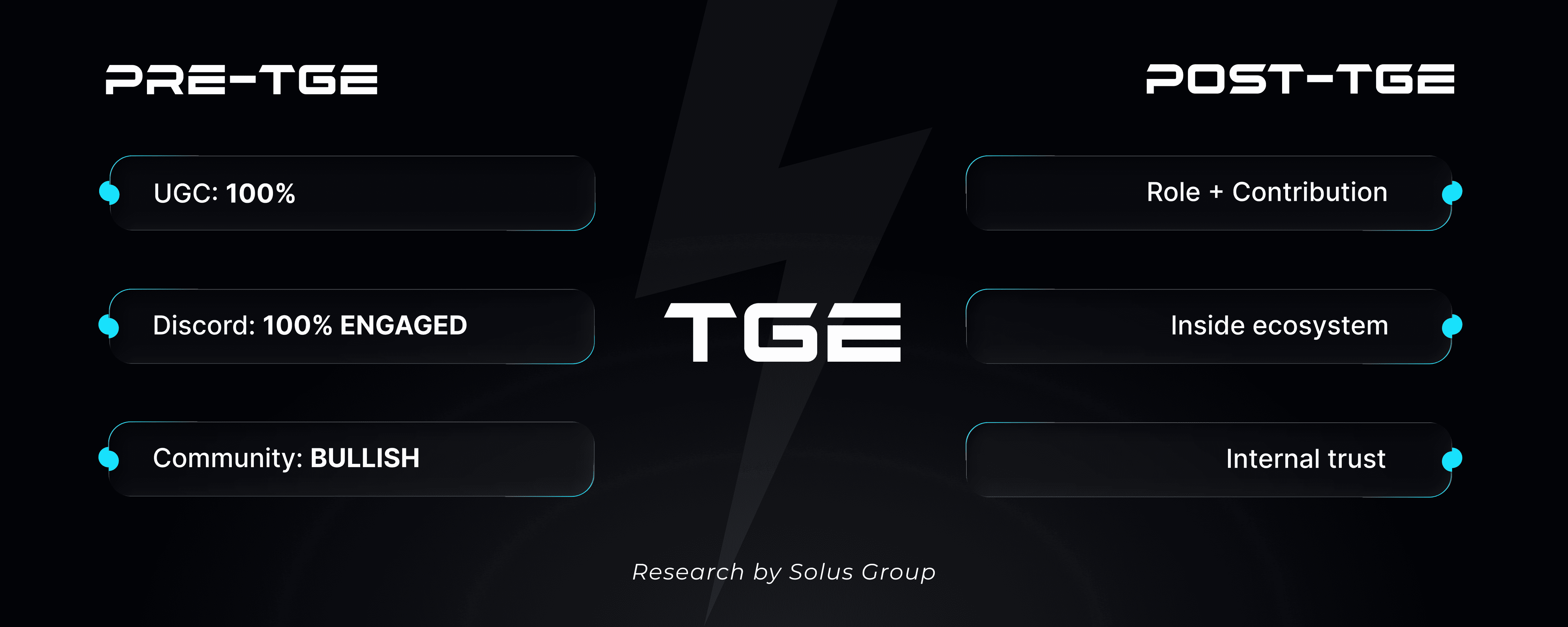
Before TGE, everything is loud: your Discord does 50,000+ messages per day, Twitter is overflowing with UGC. Ambassador programs are running at full throttle. Every metric screams “traction.”
Structured ambassador programs can create momentum, but without long-term architecture they rarely survive TGE. Sustainable design requires more than short-term activation. It needs long-horizon planning like a properly built Web3 ambassador program.
But here’s the thing: Pre-TGE engagement is artificially concentrated around one event.
Every action points to a single outcome — the airdrop.
Once that outcome is delivered, the reason for participation disappears.
So the noise doesn’t slowly decline. It falls off a cliff.
A dead Discord might seem embarrassing. But it is more that that: it's operationally fatal.
New users join after TGE expecting support, answers, signs of life. Instead, they find:
No conversations
No moderators engaging
No community defending the project
Silence creates a vacuum, and that vacuum fills with FUD fast.
Without active members countering misinformation, every doubt compounds. What used to be handled organically now spreads unchecked.
This is where teams still lie to themselves.
They’ll say:
“It’s market conditions.”
“BTC dumped.”
“Liquidity is thin.”
No. The sequence is always the same:
Community activity drops
FUD goes unanswered
New users see a dead project
Existing holders panic
Selling cascades
Token collapses
Project stalls or dies
We’ve seen this exact trajectory across 113+ token launches. The chart changes, but the cause doesn’t.
Get in touch

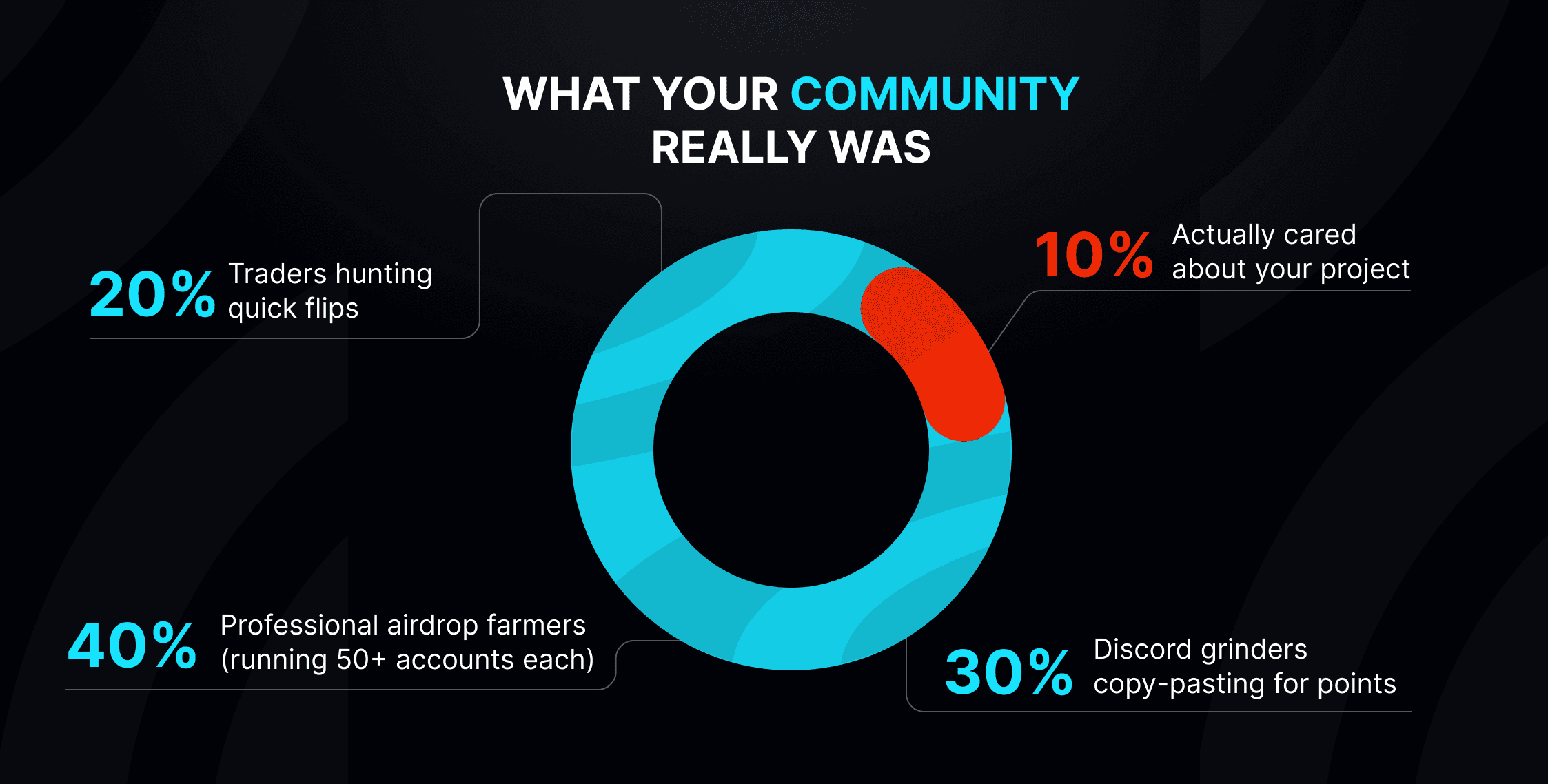
Let’s be honest about who showed up.
Most of your “community” wasn’t there for the product, the roadmap, or the long-term vision. They were there because your incentives told them to be.
They are mercenaries, and they are efficient ones.
They calculated their ROI before they ever joined your Discord.
But what about those 65,000 missing messages after TGE? They weren’t deep discussions about protocol architecture.
They were:
“when airdrop”
“sir gm”
“wen snapshot”
When the token went live, they executed their exit exactly as planned.
This is the part no one wants to admit.
For months, you trained users to behave in very specific ways:
Post content → get points
Complete quests → get rewards
Stay active → increase allocation
Every behavior was rewarded. Until suddenly… none of them were.
At TGE, incentives stop, but expectations remain.
You didn’t build a highway. You built a perfectly optimized exit ramp.
Ask most teams what happens after TGE and you’ll get vague answers:
“We’ll see how the market reacts”
“We’ll optimize based on feedback”
“Phase 2 is coming”
Well, phase 2 almost never comes. Alas!
No post-TGE missions, no contributor roles, and no ongoing value loop. No reason to stay, right?
So people leave, and that's rational.
(Activity → Trust → Financial Performance). In other words, community is infrastructure here.
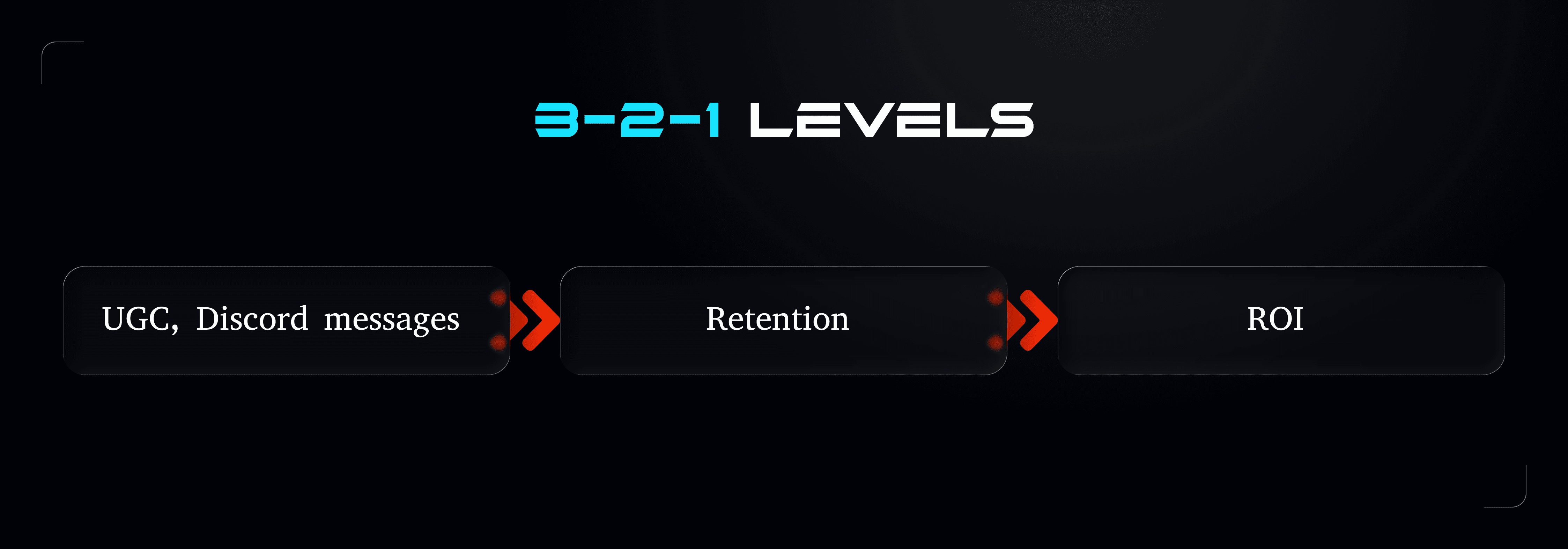
Here’s how the system actually works:
Level 3: Community Activity
UGC, Discord support, organic marketing, brand defense
↓
Level 2: Trust & Retention
New users convert
Existing holders stay
FUD gets countered
↓
Level 1: Financial Performance
Buy pressure increases
Sell pressure decreases
Liquidity grows
Token stabilizes or appreciates
Break Level 3 and Levels 2 and 1 collapse automatically.
Community activity always breaks first, and everything else is a lagging indicator.
Projects obsess over price charts while ignoring the fact that the engine underneath has already stalled.
By the time the token bleeds, it’s already too late.
When community collapses, the costs compound fast:
Marketing spend explodes
Free UGC disappears. Paid ads replace it — with worse conversion.
User acquisition stalls
New users see empty Discords and bounce immediately.
Support costs spike
What the community handled organically now requires paid staff.
Sell pressure accelerates
No counter-narrative. No confidence. Panic spreads.
What is the result? Most projects lose 70–85% of token value within 60 days of community collapse. On a $500M FDV, that’s up to $420M erased — not by the market, but by neglect.
This fatigue is a common factor in the high failure rate of modern launches. See the data behind 113 token launches and the one pattern that determines success or failure.
Survivors don’t ask “how do we keep people after TGE?”
They ask it before the first ambassador is onboarded.
So, retention, as you can see, is a design choice.
The projects that survive have:
Post-TGE missions
Contributor roles
Ongoing recognition systems
Clear paths from participant → operator
The airdrop is not the end, but it's the filter.
Even the best projects lose 60–80% of participants post-TGE.
That’s normal. What matters is who stays.
The farmers leave. The believers consolidate. The community becomes smaller, but real.
Most often, you don't have to avoid the drop, but to survive it.
That’s the difference.
Most TGEs fail by following the same 45-day post-TGE community crash pattern.
What projects call a “community” is usually 90% airdrop farmers, not future users or advocates.
When community activity collapses, token price collapse is not emotional, but rather mechanical
The real failure lies not in the token itself, but in the absence of any plan for Day 46.
Survivors don’t keep everyone. They shed mercenaries early and retain 20–40% true believers.
A real TGE community retention strategy is designed before launch. It shouldn't be duck-taped later.
Let’s talk
Because pre-TGE engagement is incentive-driven, not value-driven. Once the airdrop is distributed and point systems stop, the primary motivation disappears. Without a structured post-TGE engagement plan, activity drops mechanically.
Market conditions amplify volatility, but community collapse usually comes first. When Discord goes silent and UGC disappears, trust erodes. That reduces buy pressure and increases sell pressure. The price chart is a lagging indicator of community health.
No. They provide pre-launch traction and distribution. The mistake is assuming they’ll convert into long-term users. Farmers are acquisition fuel, not retention infrastructure.
Even strong projects retain only 20–40% of participants. The goal isn’t to keep everyone. It’s to filter mercenaries out and consolidate true believers.