
15 Min Read

Vlad Zghurskyi
Content Creator
This guide breaks down the crypto marketing trends to watch in 2025, from AI-powered automation to tokenized real-world assets that exist beyond whitepaper promises.
15 Min Read
Vlad Zghurskyi
Content Creator
This guide breaks down the crypto marketing trends to watch in 2025, from AI-powered automation to tokenized real-world assets that exist beyond whitepaper promises.
The crypto industry in 2025 doesn’t look much like the hype-fueled circus of years past. There are no more empty airdrop campaigns; there are no more vaporware whitepapers.
What's there then?
Web 3.0 marketing is finally catching up to what blockchain promised in the first place: transparency, ownership, and communities that matter.
In other words, marketing in Web3 has shifted from traditional digital marketing models toward community-driven approaches for user empowerment over data extraction.
And such evolution can't go past affecting the trends.
Let's find out what they!

The Web3 trends shaping 2025 are practical, grounded, and useful. They’re not hype-y; we see a turn to giving people ownership, making campaigns transparent, and letting communities steer the conversation. Let’s break down the ones worth watching.
Trend | What is it? | Why does it matter? |
RWA Tokenization | Real assets on-chain | Turns fans into co-owners |
Open Social Graphs | Portable digital identity | Unified audience view |
AI Agents | Autonomous marketing bots | 24/7 smart automation |
Token Incentives | Rewards via tokens | Transparent, gamified loyalty |
Token-Curated Ads | Community-voted ads | Filters quality, builds trust |
Gamified Ads | Play-to-earn marketing | Fun, sticky engagement |
If there’s one phrase that keeps popping up in 2025, it’s “Real-World Assets”. Unlike so many crypto fads, RWAs are not merely speculation dressed up as innovation. They're assets people already understand, made liquid and tradable on-chain.
The sector now sits at over $230 billion, and it’s not hard to see why: utility has a way of attracting serious capital.
For marketers, RWAs open doors beyond “buy our token and pray.” Brands can tokenize limited-edition sneakers, real estate shares, giving their audience something tangible to own. Being a fan doesn’t mean only following the brand; no, you get to become part of it.
This is one of the emerging trends shaking up marketing in Web3.
Unlike Web 2.0 social media, where every platform hoards your user data in silos, the decentralized web lets your identity and connections travel with you. That means you can jump between apps, DAOs, or even virtual worlds. All the maneuvers are done without losing your profile, history, or community.
For marketers, this is huge news.
You are getting a clearer picture of your target audience across the whole web3 ecosystem. More context means better market research, and better research leads to sharper digital marketing strategies. Win-win.
With open social graphs built on principles of the semantic web, marketing campaigns can actually follow users across platforms easily. How might that work?
You could launch an influencer marketing initiative that begins on a dApp, flows through an NFT community, and lands in the metaverse.
For the marketing industry, it might seem like innovation, but it is, in fact, absolutely necessary and a timely addition.
Of course, this article couldn't miss the omnipresent trend of AI.
In the case of Web3, we are talking about AI agents.
They are quickly becoming the rockstars of Web3 marketing, stepping in as autonomous digital workers that pull off complex marketing strategies with ease.
Some might think they are chatbots with an attitude. But... no, they’re not.
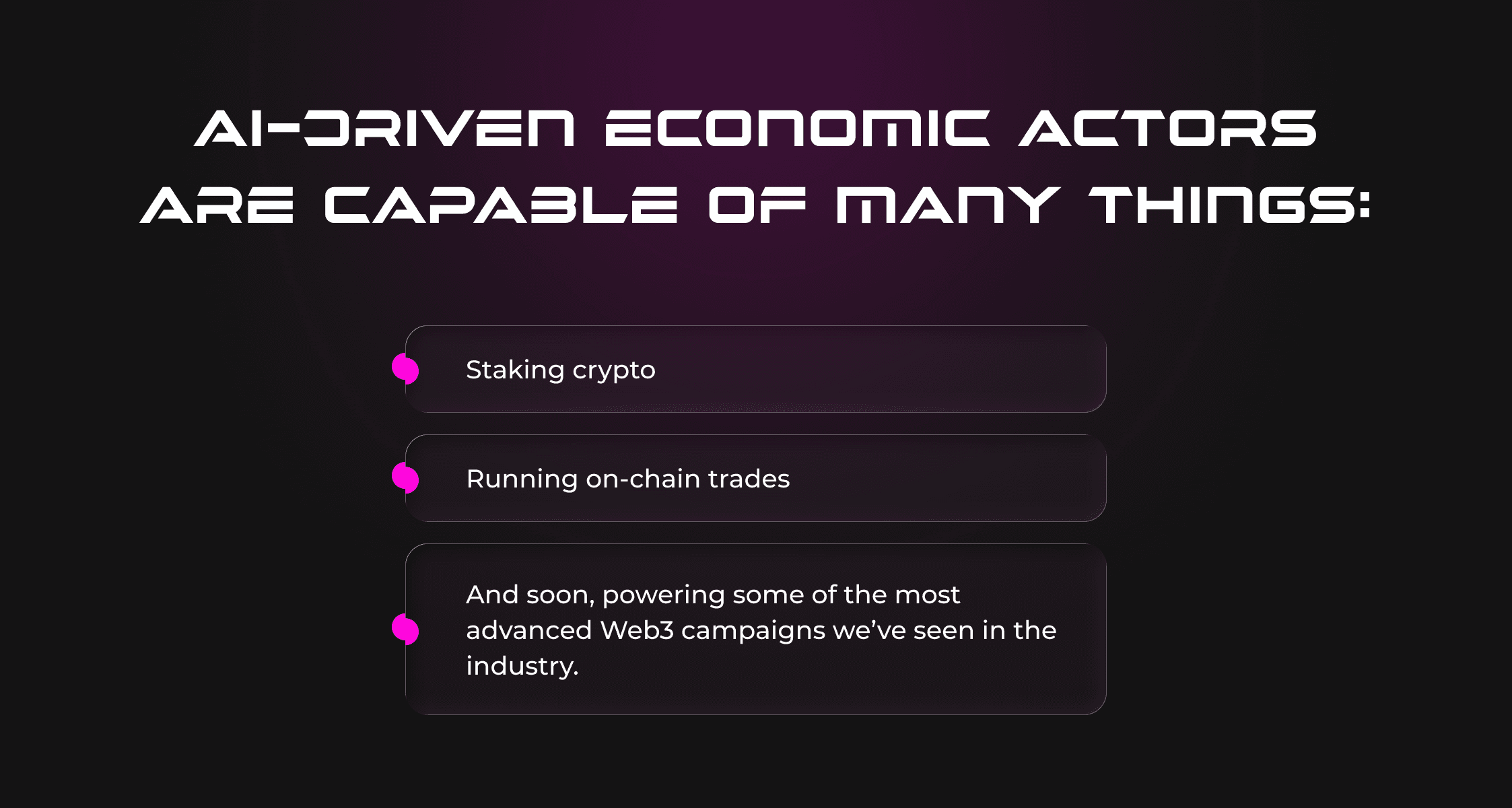
AI agents can rip through oceans of blockchain data, sniff out the best opportunities for any Web3 project, and launch precise digital marketing pushes.
In the meantime, humans are still drafting the brief.
For marketers, this means:
24/7 operations
Lower costs
Smarter automation.
Token-based incentive programs are the next on our list. What's so special about them?
Essentially, they change the marketing dynamic by transforming how brands engage with their communities through ownership models. Rewarding users with tokens creates sustainable engagement models.
Token-based rewards can appreciate in value, be traded on secondary markets, or provide governance rights.
Smart contract technology enables automated reward distribution based on specific user actions, and that adds transparent incentive structure. This gamification approach increases user engagement and creates viral marketing effects.
Token-curated advertising is another revolutionary approach to ad quality and relevance. Blockchain tech takes advertising to the new reality: every impression and transaction is verifiable.
Community members stake tokens to vote on ad quality and relevance. High-quality ads that the community finds right are promoted. Irrelevant content is filtered out.
If you think about it, it's a self-regulating advertising environment where content marketing is focused on community-approved messaging.
Looking for one of the most exciting trends for 2025 in web3 advertising?
The answer is as simple as it is curious: gamification.

With blockchain technology, brands can design play-to-earn experiences that are actually fun. In the metaverse, with its immersive and decentralized environments, consumers can interact with businesses in real time.
Web3 gaming mini-games, quests, interactive challenges are the main activities where users can score NFTs, tokens, and other digital assets. All of which double as highly engaging content that keeps users coming back.
Pair that with branded loyalty programs.
For marketers, it’s a chance to deliver killer marketing services with the support of a skilled web3 marketing agency.
Buying ads in Web3 doesn’t have to be the messy, middleman-heavy process it is often in Web2 marketing. Thanks to smart contracts and automation, brands can now set campaigns in motion that basically run themselve.
Automated ad buying in web3 uses smart contracts and decentralized protocols to create advertising markets.
Here's how it works: programmatic advertising powered by AI automates the ad buying process, placing ads based on user behavior and adjusting bids in real-time. The use of blockchain technology provides verifiable metrics for ad performance.
On-chain attribution provides what we waited for: unprecedented transparency in tracking marketing performance across the web3 ecosystem.
Everything is recorded on the blockchain, which means every transaction and ownership change is documented. Moreover, it is documented permanently.
What does it give marketers?
Mainly, a chance to track user journeys from initial touchpoint to final conversion with complete accuracy.
This level of attribution accuracy enables sophisticated marketing optimization and budget allocation. Any Web3 brand can identify its most effective marketing channels and make data-driven decisions about future investments.
We all love native advertisement, and we’ve written a lot about it.
On-chain advertising represents the next evolution of native advertising.
Instead of disappearing banners or posts that get lost in the feed, promotional content gets baked right into blockchain transactions and protocols.
On-chain ads can take different forms:
Sponsored transaction messages
Branded elements within DeFi protocols.
And because they’re written into the blockchain itself, they stick around as permanent brand exposure that no ad blocker can touch.
If you want to combine the best aspects of centralized and decentralized advertising systems to create flexible, scalable solutions, your best option is hybrid generalized ad protocols. They enable brands to leverage traditional advertising channels and web3-native advertising opportunities through unified platforms.
The main thing here is standardization. These protocols create shared interfaces that let different marketing platforms talk to each other, which in turn opens up bigger audiences for advertisers and more monetization options for publishers.
And when you layer in high-quality content, secure data privacy standards, and the use of digital tokens for seamless payments, hybrid ad protocols help you build trust.
Book a call

Organic KOL PR is changing the rules on blockchain marketing by swapping out traditional cash deals for something far more valuable: exclusive alpha.
Let's see what it means.
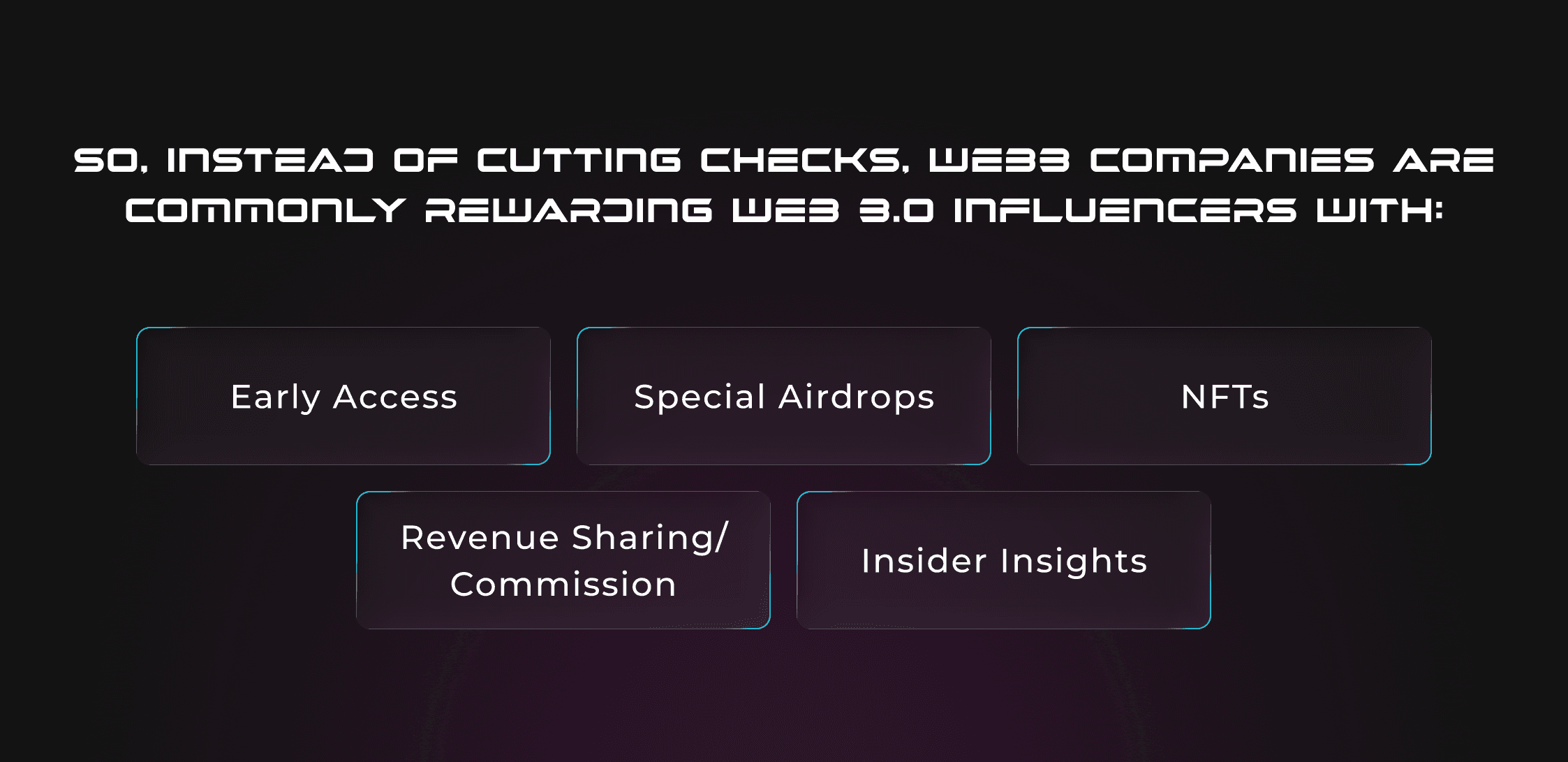
Then, influencers share the alpha with their followers, fueling authentic advocacy. Because it’s rooted in status and value, not just payment.
This approach is leaner on the budget but heavier on impact. Compared to traditional influencer marketing, organic KOL PR sparks viral energy and deeper user engagement.
The use of on-chain data enables sophisticated influencer selection and performance measurement. Brands can verify influencer reach and engagement through blockchain analytics. This data-driven approach to influencer marketing creates more effective partnerships and better ROI.
By using on-chain analytics, brands can measure influencer reach and verify engagement. Tie that in with crypto SEO, smart bounty campaigns, a growing email list, and even layered email marketing, and you’ve got a multi-channel approach that maximizes ROI.
Plus, when you encourage user-generated content and add interactive content into the mix, these campaigns evolve from simple promotions into community-driven movements.
Naturally, doing all this rocket science by yourself is… well, quite a rocket science. That's why you can just reach out to us and have your influencer marketing campaigns created, nailed, and bring results. Contact us for that.
These 2025 trends are just the foundation for a more complex market shifting toward M&A and deep liquidity. See our Solus 2026 Web3 Playbook for a long-term strategic view.
The crypto marketing landscape, naturally, goes far beyond the trends. And how can you possibly catch up with all that?
To get a complete web3 marketing guide that covers the latest web3, you need more than one article. You need proper educational content.
Check out our latest selection of proven crypto marketing strategies that leading web3 companies use to succeed in their markets and stay ahead of the curve.
KOLs may drive more than hype: they build credibility.
A solid engagement plan beats random influencer marketing.
Know your audience before you pick your KOL. Builders, traders, gamers - every Web3 niche has its own crowd.
Budget for collaboration, not just exposure.
The most effective influencer marketing in Web3 doesn’t look like marketing. Native content wins every time.
Reward participation.
Think in funnels. Build a KOL engagement plan that moves users from first exposure to long-term retention.
Schedule a call
It will become even more automated and AI-driven by 2026, with artificial intelligence handling increasingly complex marketing tasks. We can expect greater integration between physical and digital experiences and more sophisticated tokenomics in web3 marketing strategies.
Open social graphs are decentralized networks that allow users to maintain their social connections and data across multiple platforms. Unlike traditional social media where connections are locked to specific platforms, open social graphs enable data portability and user control.
Gamified ads are becoming increasingly important for web3 as they align with the community-driven nature of decentralized platforms. These experiences create higher engagement rates, provide tangible rewards to users, and build trust.